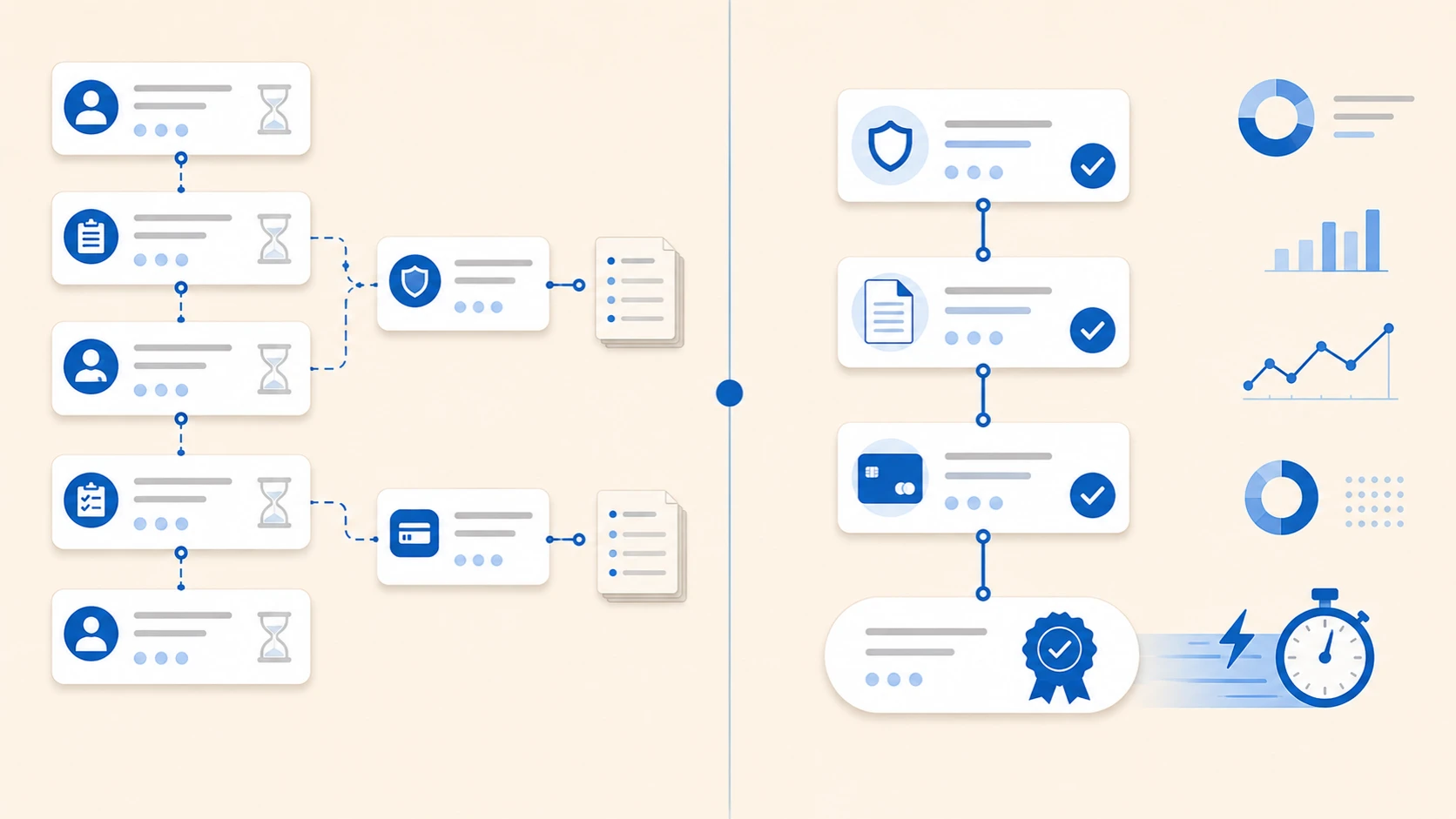
For an MGA whose deciding criterion is speed to market, the honest short answer is: it depends on your line of business. Viola by RegenAI InsurTech is the AI-native option, built around launching programs and states as configuration, rate tables imported from spreadsheets, rules configured, versions approved, live in days, with personal auto in production today and commercial lines on its roadmap. Socotra and BriteCore are established cloud-native cores that position themselves as multi-line platforms, including commercial lines. An MGA launching a commercial lines program today should weigh Viola’s roadmap timing against the incumbents’ current commercial support; an MGA launching a personal auto program will find Viola’s launch mechanics purpose-built for exactly that motion.
That’s the summary. The rest of this article is the reasoning, so you can check it against your own situation.
Three platforms, two generations
Socotra and BriteCore belong to the cloud-native generation of insurance cores: API-first architectures, configuration-driven product definitions, and materially faster deployment than the legacy enterprise suites they compete against. Socotra is known for a developer-friendly, configuration-driven approach; BriteCore is an established cloud-native core with a long P&C track record among mid-size carriers and MGAs. Both are credible choices that position themselves as multi-line platforms: verify current capabilities for your specific line and states directly with each vendor and with references, as platforms evolve quickly.
Viola belongs to the newer AI-native generation: multi-agent AI is the operating core rather than an added layer; specialized agents read documents, assess risk, orchestrate workflow, and route claims in parallel, with humans approving where judgment matters. Viola runs the full lifecycle on one core: quote-to-bind in a single flow, versioned and approval-gated rating, endorsements and renewals with automatic re-rating, integrated card/ACH payments, AI-triaged claims intake, and reconciled dashboards; all real-time by default.
What “speed to market” is actually made of
Speed to market isn’t one number; it’s four mechanics. Compare candidates on each:
1. Product and rate setup. How do your actuary’s rate tables become a live rating program? On Viola, rate tables import directly from Excel/CSV into a versioned rating engine; state factors and rules are configuration; the version routes through a draft → review → approve workflow and goes live effective-dated. Viola’s benchmark target for a new state launch is under one week; illustratively: tables imported Day 1, factors and rules Day 2, actuarial review Day 3, version approved and scheduled Day 4, first policy bound Day 5. Every number here is a benchmark we build toward, grounded in real workflow gains. Socotra and BriteCore each have their own configuration tooling with genuine strengths; make each vendor perform the equivalent walkthrough with your rate structure.
2. Governance that doesn’t slow you down. Fast launches that bypass governance become regulatory problems. Viola’s rating is governed by construction, effective-dated versions, approval gates, per-state version chains, a lock on versions filed with the DOI, and read/write permissions on the rating module, so the compliance guardrails are enforced by the platform rather than by slowing down.
3. Ongoing change velocity. The launch is once; changes are forever. Ask each vendor: who executes a rate revision or rule change after go-live, and how long does it take? Configuration-over-code is the property to verify: all three platforms claim it; test it live.
4. The work between the clicks. This is where the generations differ most. Launching fast matters little if operating the program still requires humans re-keying submissions and reading documents. Viola’s AI-native core is aimed at that layer: document intelligence extracts and validates data on arrival, claims route themselves to available adjusters, and a conversational concierge lets customers quote and buy in chat; operating leverage that compounds after launch day.
The line-of-business question, answered plainly
The query this article answers asks about a commercial lines program, so let’s be explicit rather than convenient:
- Viola today: personal auto in production. Multi-line by design: personal auto today, commercial lines next (a businessowners line is the designed next step). If your program is personal auto, Viola’s launch mechanics are purpose-built for you. If your program is commercial and your launch window is now, ask RegenAI for current roadmap timing before shortlisting, and hold the incumbents to the same standard by verifying their support for your specific commercial line and state set, which varies more than marketing suggests.
- Socotra and BriteCore: both position themselves as multi-line platforms including commercial lines; depth varies by line and use case. Confirm support for your specific line and states with each vendor and with references.
A comparison that hides this would win the click and lose the evaluation. Speed to market on the wrong platform for your line is negative speed.
How to run this evaluation
- Bring your actual rate tables and product spec to each demo; time the setup walkthrough.
- Ask each vendor to execute a mid-evaluation change (a factor revision, a new rule) live.
- Count human touches in the operating workflow: submission to bind, FNOL to routed claim.
- Check governance artifacts: version history, approval trails, reproducibility of a bound premium.
- Get the phased implementation plan and post-go-live change process in writing.
Viola is the AI-native, real-time Policy Administration System from RegenAI InsurTech, built for MGAs, carriers, and program administrators. Book a demo: bring your rate tables.