A manual handoff happens any time a form, a quote, or a bound policy moves from one person’s inbox into someone else’s spreadsheet. It is a big part of why an MGA’s underwriting team spends so much time assembling files instead of pricing risk. Accenture’s survey of underwriters found that up to 40% of their time goes to non-core and administrative work, and FurtherAI’s 2026 industry guide, reading the same data, estimates that only about 30% of an underwriter’s week is spent on actual risk decisions.
If your MGA still shuffles forms through email chains and tracks bind status on a shared spreadsheet, that imbalance is not a temporary annoyance. It is a cost you pay on every file.
Fixing it doesn’t mean tearing out what’s already there. It means choosing which handoff to automate first, then building out in an order that never takes the quoting pipeline offline.
Where manual handoffs sit in an MGA’s workflow
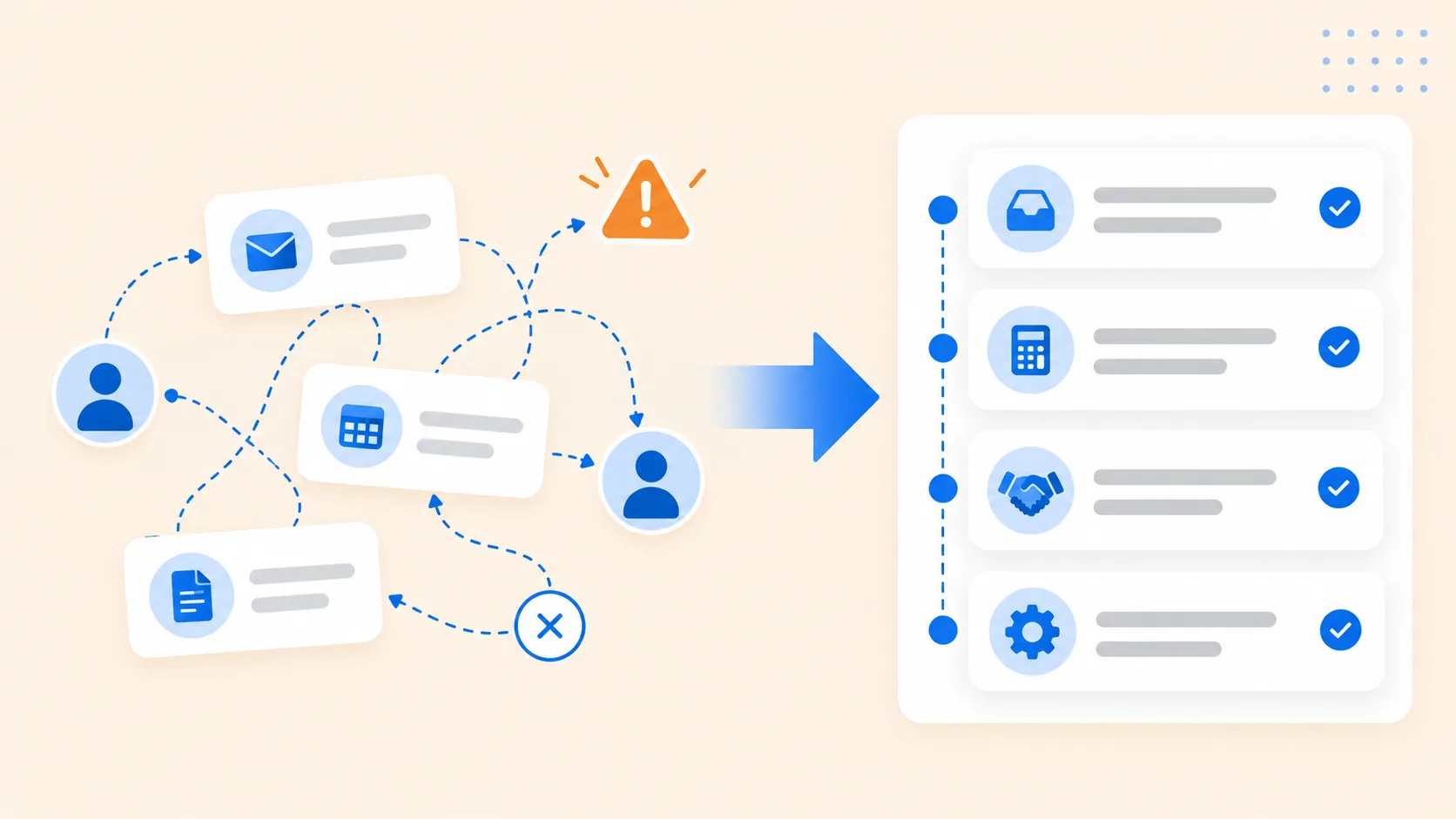
A manual handoff is any point where someone re-types, reformats, or routes information by hand that a system could have passed along by itself. In a typical spreadsheet-and-email MGA, the same four choke points show up almost every time:
- Submission intake: a broker’s email with an ACORD form attached gets opened, read, and typed by hand into a rating spreadsheet or legacy system.
- Underwriter-to-broker quoting: a quote is built offline, then goes back and forth by email as terms are negotiated, with no single version anyone can call current.
- Bind confirmation: once terms are agreed, binding instructions go through another round of emails before anyone updates the system of record.
- Policy issuance and servicing: endorsements, renewals, and billing changes are logged in yet another spreadsheet, disconnected from the original submission data.
Each of these is a point where data gets re-typed, and every re-type is a chance for an error. A 2025 Infrrd analysis, citing Quality Magazine, puts the typical manual data entry error rate at around 1%. At that rate, a busy MGA keying thousands of fields a month can still rack up dozens of errors, each of which has to be caught, investigated, and corrected before it becomes a bigger problem downstream.
Submission intake is the handoff that pays off fastest
Submission intake is where automation pays off fastest, because every file passes through it. The moment a broker’s form arrives, the clock starts, and an underwriter can spend a large part of the file’s life pulling data out of attachments by hand before they even begin to look at the risk.
Markel’s partnership with Cytora to digitize submission intake and automate pre-underwriting routing is the most widely cited real-world result in this space. According to Cytora’s published case study, it delivered a 113% increase in underwriting productivity, measured as gross written premium per employee, and cut quote turnaround for strategic partners from an average of one day to two hours. Those are vendor-reported figures, but they are not a projection. It is what happened once a carrier stopped treating intake as a re-keying chore and started treating it as a data extraction problem a system could solve.
For an MGA still doing intake by hand, this is the handoff to fix first. Automate the data capture and routing at the front door, and every later step (quoting, negotiation, binding) inherits clean data instead of whatever errors crept in during manual entry.
A phased rollout doesn’t mean taking quoting offline
A phased rollout automates one handoff at a time, starting with intake, while the rest of the workflow keeps running on existing tools until each new piece proves itself. An MGA can’t stop binding policies for a quarter while a new system is set up.
The order that avoids disruption usually looks like this:
- Automate submission intake and data capture, feeding clean, structured data into whatever rating process you already use, spreadsheet or not.
- Once intake data can be trusted, add automated quote generation, so underwriters review and approve quotes rather than building them from scratch.
- Connect quoting to bind confirmation, so the system of record updates the moment terms are accepted instead of waiting on a follow-up email.
- Once the quote-to-bind path is stable, extend automation into policy servicing: endorsements, renewals, and cancellations.
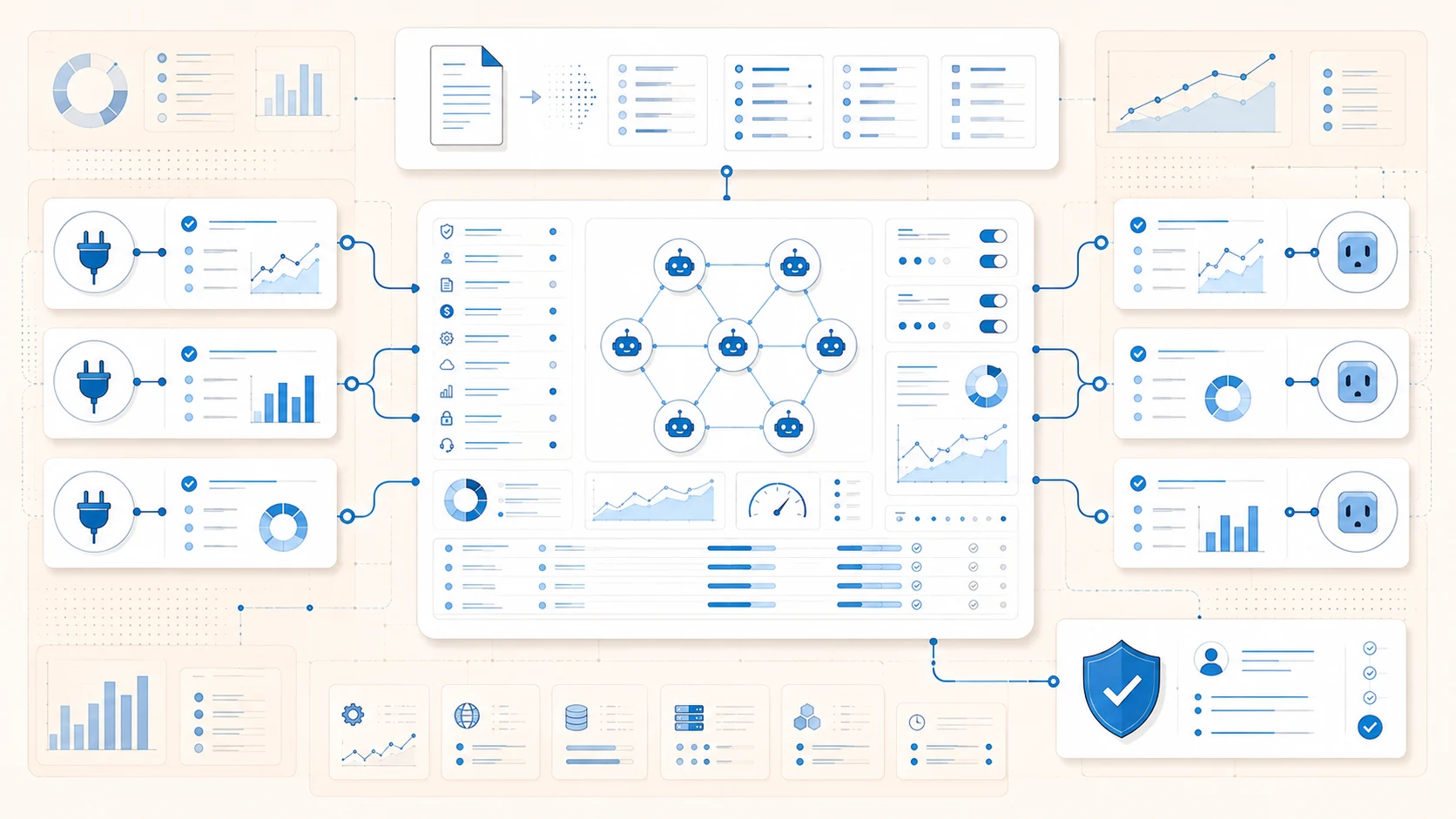
That is the idea behind an AI-native, API-first integration layer: new automation connects to what is already in place (a CRM, a carrier portal, a payment rail) rather than requiring a full replacement before it does anything useful. An MGA can add one module, prove it on real submissions, then move to the next, with no single big-bang switchover.
The real obstacle is legacy data, not reluctance
Most MGAs that haven’t automated aren’t resisting the idea. They are working with data that isn’t in a shape automation can use. An AM Best survey of 152 rated insurers and MGAs, published in spring 2026, found that 41% already use AI across core business areas. The biggest barriers to going further were data readiness (45%), security and privacy (43%), and legacy system integration (41%).
Kaitlin Piasecki, Industry Research Analyst at AM Best, put it directly in the report: “AI systems are heavily dependent on high-quality, clean and well-structured data. Legacy systems can create significant barriers when implementing AI because they simply were not built for this type of data integration. Many of these legacy systems are outdated and store data in inconsistent formats with no standardisation.”
That is exactly why submission intake should come first. It is where messy email attachments and inconsistent spreadsheet formats become clean, structured data for the first time. Automate that step, and everything after it gets data it can actually use. It is also the sequence Viola by RegenAI is built around: AI handles triage, routing, and data capture at the front end, so quoting and binding work with structured data instead of needing another manual clean-up. Viola also keeps a full audit trail of every significant action, which matters more as states add oversight rules for AI-assisted underwriting decisions.
The size of the market shows why this sequencing matters. Conning estimated US MGA direct premiums written at $114.1 billion in 2024, and AM Best counted nearly 800 MGAs meeting the NAIC reporting threshold in 2025. That is a very large number of underwriting teams running the same submission-to-bind process, and most still do at least part of it by hand.
Regulators are moving toward documented oversight
Automating these handoffs now also puts an MGA ahead of a regulatory shift already under way. The NAIC’s Model Bulletin on insurers’ use of artificial intelligence, adopted in December 2023, sets out expectations for governing AI used in underwriting, rating, and claims, As of October 2026 it has been adopted by 27 states, the District of Columbia, and Puerto Rico, and several large states, including California, Colorado, New York, and Texas, have issued their own AI guidance instead. Texas’s Bulletin B-0003-26, issued in June 2026, goes further: for consequential decisions, the Department expects a person to review and agree with an AI-supported decision before action is taken.
None of this bars AI from the process. It means there has to be a documented trail showing that a person reviewed the decisions that matter, and that trail is far easier to produce from a system built with role-based access and audit logging from the start. A spreadsheet keeps no record of who changed what, or when.
If you want to see what automated intake looks like on your own submissions, talk to us.