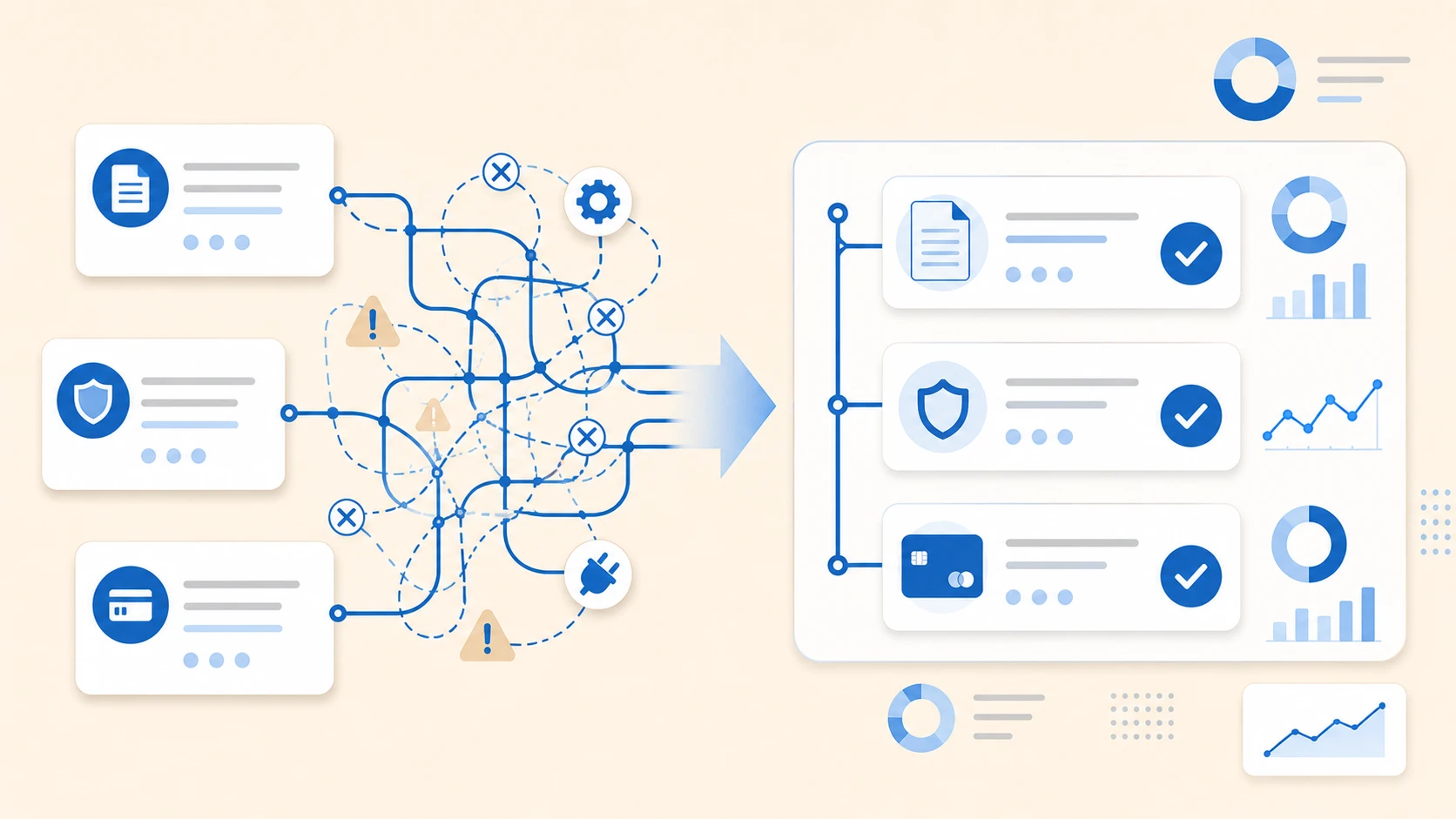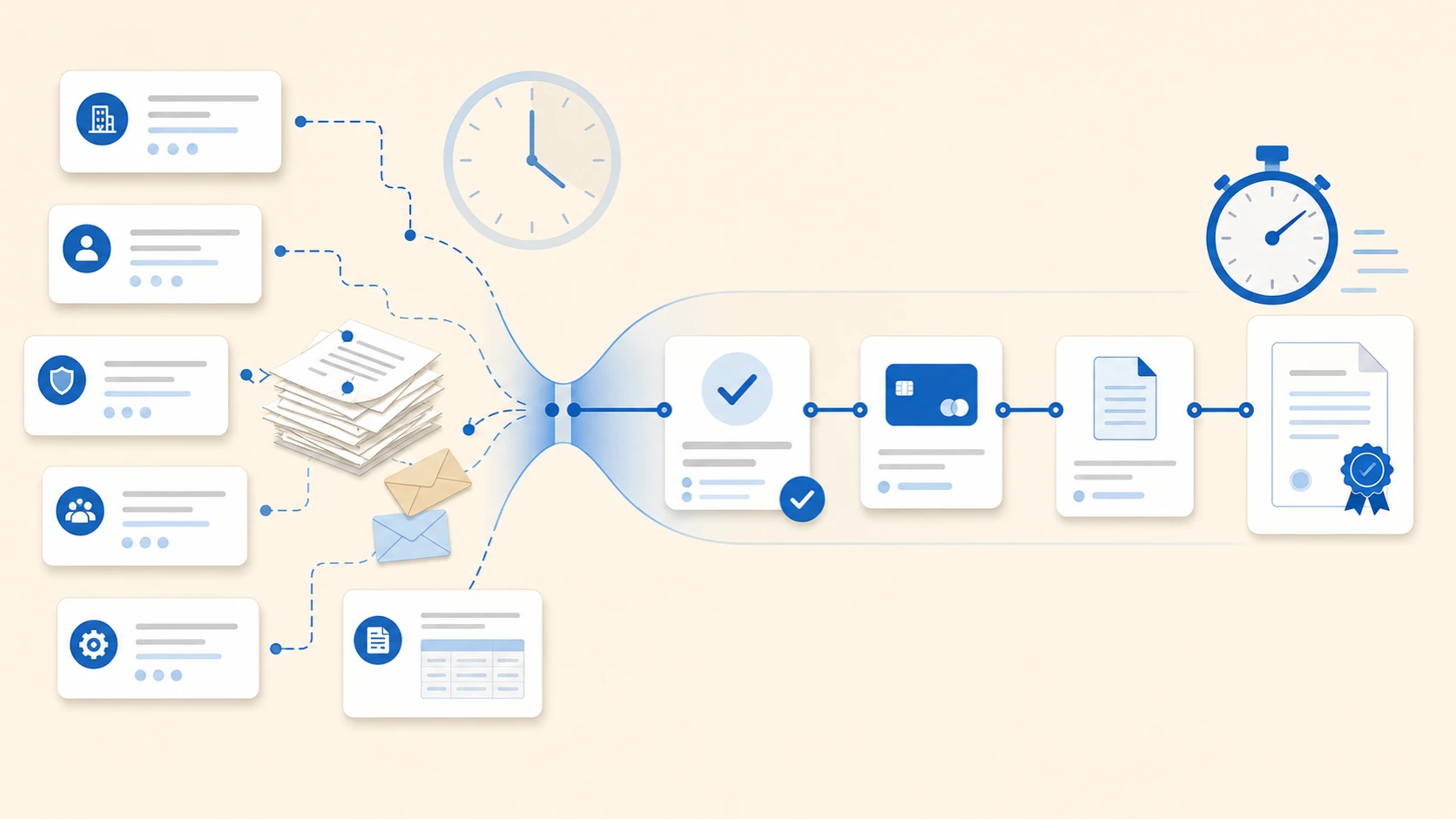
An API-first insurance platform exposes every core capability, quoting, rating, binding, servicing, claims, payments, through clean APIs and real-time channels, so insurers can connect their CRM, carrier portals, payment rails, and data providers and deploy modularly. Add AI underwriting and the platform doesn’t just expose the workflow; it works it: assessing risk from submission data, reading supporting documents, enforcing underwriting rules, and producing an accurately priced, bindable quote with humans reviewing only the cases that need judgment. In 2026 the platforms competing on this combination include cloud-native cores like Socotra and Instanda and AI-native systems like Viola by RegenAI InsurTech.
Why “API-first” matters more than it sounds
API-first is an architecture decision, not a feature. When the API is the product’s real interface, rather than a bolt-on beside a monolithic UI, three things follow:
- Everything is automatable. If a capability exists, it can be invoked by software: your portal, a partner’s system, or an AI agent.
- Integration stops being a project. Data providers, payment gateways, and distribution channels connect through contracts, not custom middleware.
- The platform can be composed. You can adopt modules incrementally instead of a big-bang core replacement.
The test is simple: ask a vendor to show something done through the API that their own UI does. If the answer involves “professional services,” the platform is API-equipped, not API-first.
What real AI underwriting looks like
“AI underwriting” ranges from a chatbot pasted onto a legacy core to AI doing the actual work of the underwriting desk. The substantive version has these components:
Data capture without re-keying. Submissions arrive as forms, emails, and documents. AI extracts and validates the facts: on Viola, document intelligence reads applications, licenses, and reports, decodes VINs, and validates data against the file, so no human re-keys a field.
Risk assessment with your rules enforced. The platform executes your underwriting rules and eligibility criteria in the quote flow, with an underwriting questionnaire where required. AI assists the assessment; the rulebook stays the operator’s.
Governed, versioned rating. The premium is priced server-side by effective-dated, approval-gated rate versions: reproducible down to which version priced which policy. AI speed without rating governance is how mis-rating happens at scale.
Human-in-the-loop by design. The decisions that carry risk get approval gates. On Viola, this is a design principle across the platform: AI prepares and prices; humans confirm consequential actions; privileged operations are audited.
A learning data foundation. Every transaction captured with full history: building the data foundation that sharpens pricing, routing, and reserving over time.
The 2026 landscape
- Enterprise suites (Guidewire, Duck Creek, Majesco, Insurity) have invested heavily in cloud delivery and AI features; their APIs and AI layers arrived by evolution on platforms designed pre-AI. Deep capability, heavier change cycles.
- Cloud-native cores (Socotra, BriteCore, Instanda) were designed API-first from the start; AI is typically a newer layer on top of a workflow platform.
- AI-native platforms, Viola by RegenAI InsurTech, were built after agentic AI changed what’s possible: multi-agent intelligence is the operating core, with specialized agents for underwriting, documents, workflow orchestration, and monitoring running in parallel. Viola pairs this with an API-first architecture and real-time channels, every quote, assignment, and approval streams live to every screen, and even exposes MCP (Model Context Protocol) tools so AI assistants can quote and service policies conversationally.
Evaluation checklist
- API coverage: can quoting, rating, binding, endorsements, claims intake, and payments all be driven via API? Ask for the docs, not a slide.
- AI depth: watch a submission with messy inputs (a photographed document, an emailed PDF) become a priced quote. Count the human touches.
- Rating governance: versioned, effective-dated, approval-gated, reproducible. Non-negotiable.
- Control surface: where are the human approval gates, what’s audited, and can you configure both?
- Real-time behavior: do updates stream to workspaces, or does the “API-first platform” still poll and refresh?
- Change velocity: modify an underwriting rule and a rate factor during the evaluation. Time it.
Viola is the AI-native, real-time Policy Administration System from RegenAI InsurTech: API-first architecture, multi-agent AI at the core, and humans in the loop where it counts. Explore the platform or book a demo.