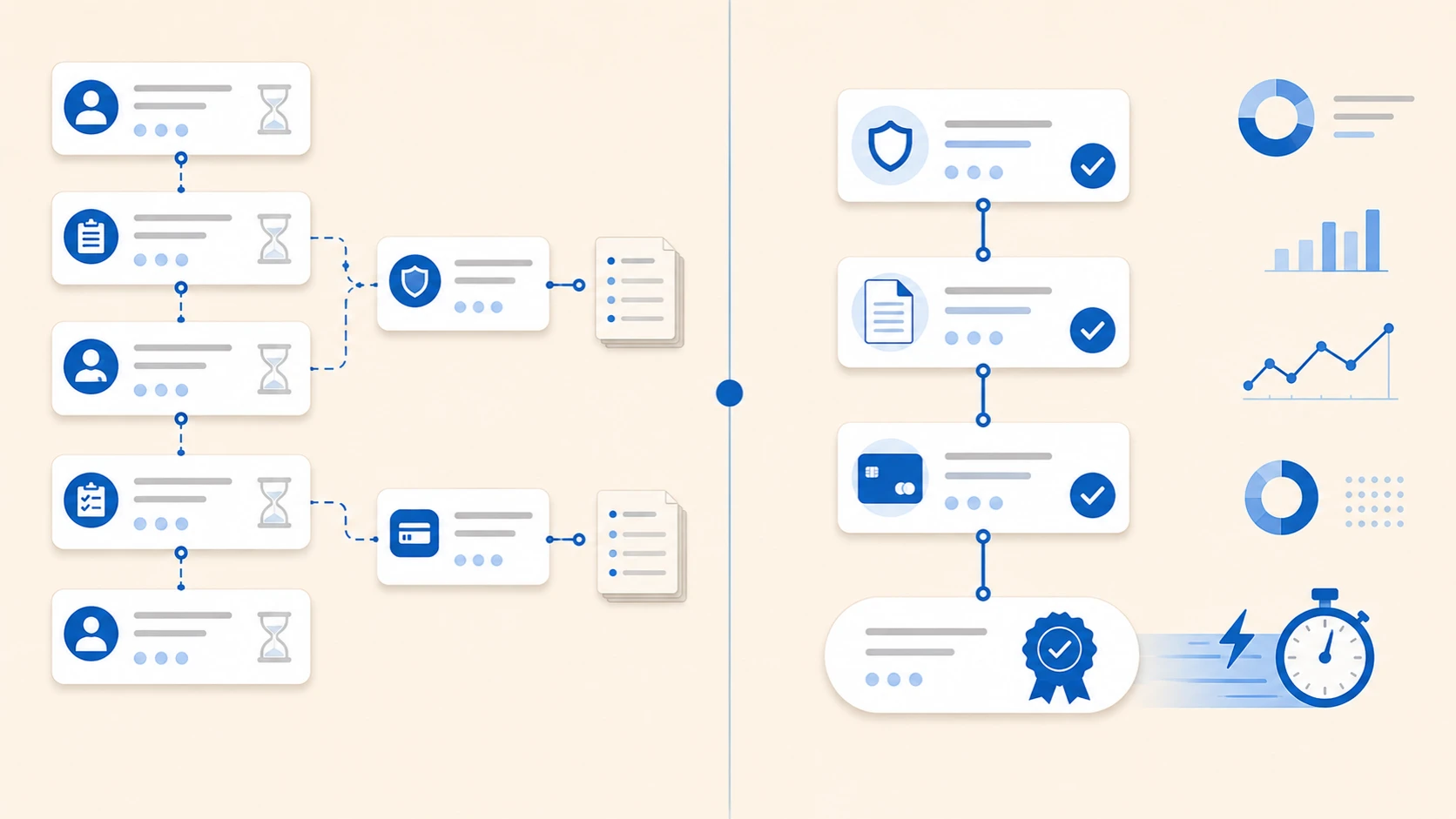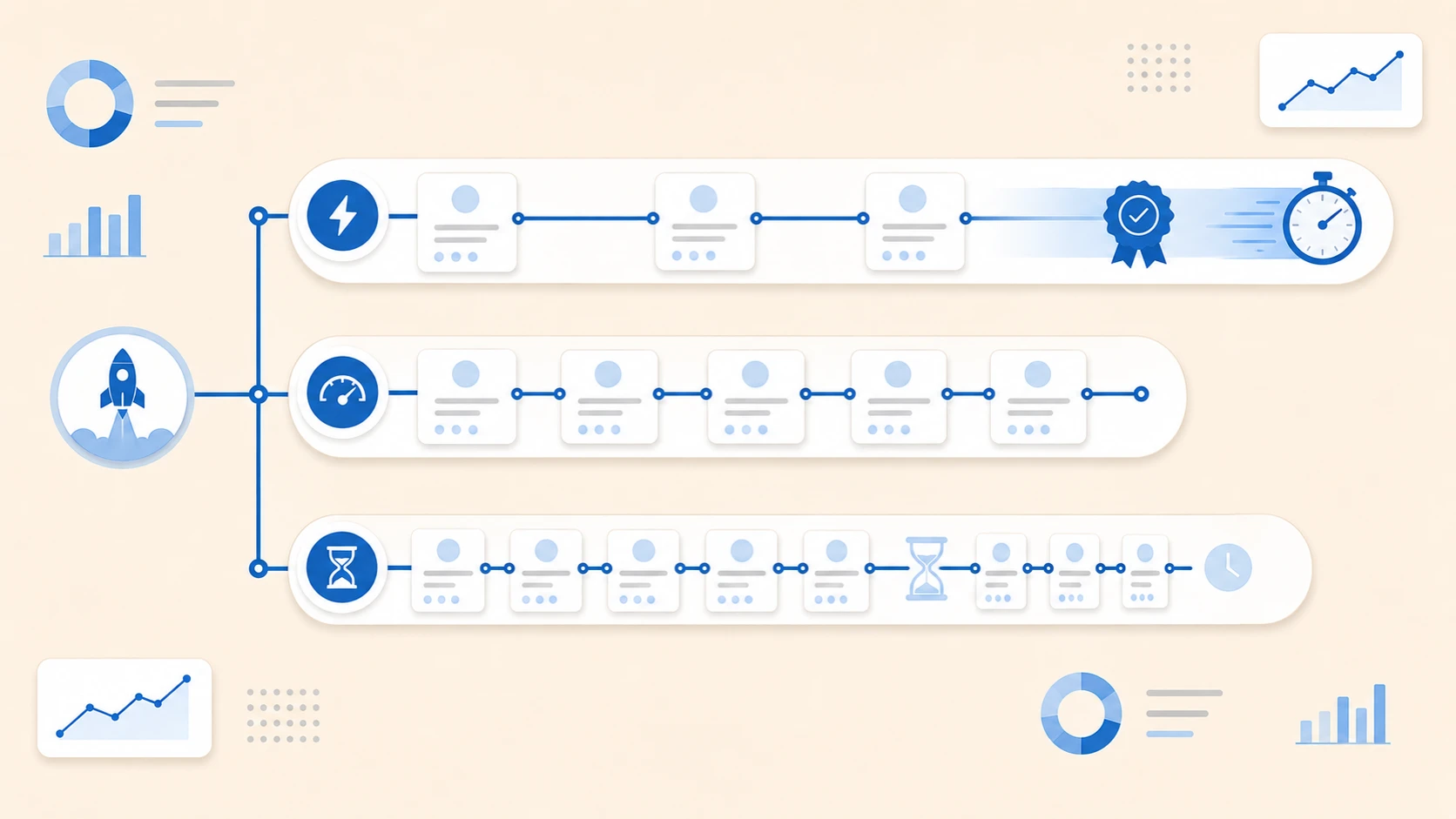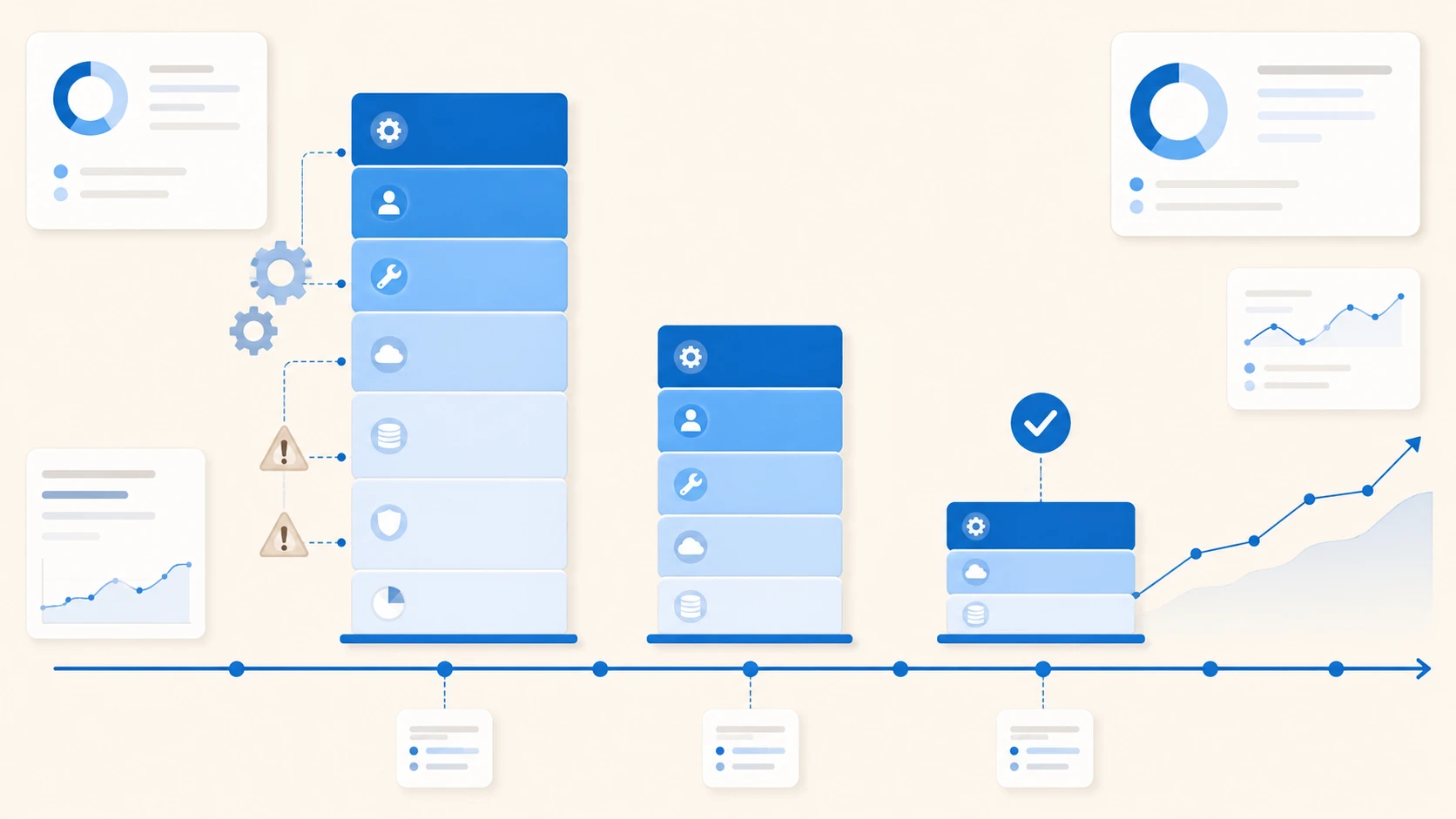
For a mid-market carrier, total cost of ownership (TCO) on a core platform is decided less by the license line than by four accumulating costs: implementation, the cost of change after go-live, the manual work the platform fails to remove, and vendor/SI dependency over a decade. Guidewire and Majesco are established enterprise suites with deep capability whose cost structures reflect enterprise implementations and ecosystems. Viola by RegenAI InsurTech is an AI-native platform whose economic argument is aimed directly at those four accumulators: configuration over code, automation that removes manual work outright, and a target of 30–45% lower total cost of ownership versus legacy platforms. Every number here is a benchmark we build toward, grounded in real workflow gains. No responsible comparison can hand you competitor price figures, engagements vary too much, but this framework will let you compute your own answer.
The four places core-platform TCO actually accumulates
1. Implementation. Enterprise suite implementations for carriers are substantial programs, commonly involving system integrators, multi-phase timelines, and budgets that can exceed first-years license costs by multiples. Guidewire anchors the enterprise end of the market with its policy, billing, and claims suite; Majesco is a long-established suite provider often evaluated by mid-market carriers: verify each vendor’s current product scope and delivery model directly. Configuration-driven platforms compress this phase structurally: on Viola, rate tables import from actuarial spreadsheets, products and state rules are configuration, and rollout is phased (new business first). Whatever vendors quote, demand the implementation plan in writing with your lines and states specified, then add contingency to the enterprise numbers, because history says to.
2. The cost of change. This is the decade-scale differentiator. Every rate revision, new state, product tweak, and form update either flows through your team as configuration or through a vendor/SI cycle as a project. Mid-market carriers on enterprise suites often discover their real platform cost here: a standing SI relationship as an operating expense. Viola’s design goal is that change is the operator’s to make: versioned rating with spreadsheet import and approval workflows, state launches targeted in under a week, products and rules configured without vendor dependency. Test this on any shortlisted platform by pricing your last twelve months of actual changes under each vendor’s model.
3. The work the platform doesn’t remove. A core that digitizes workflow but leaves humans re-keying submissions, reading documents, and routing claims manually has hidden headcount cost in perpetuity. This is where platform generation matters: Viola’s multi-agent AI core reads and validates documents on arrival, routes claims to available adjusters automatically, recommends reserves for human approval, and answers portfolio questions in plain English through its Concierge. Its productivity target, 40%+ through end-to-end automation, is exactly a TCO claim: the same team operating more premium. A benchmark we build toward, grounded in real workflow gains. Enterprise suites increasingly offer AI capabilities as well; in every case, count human touches per policy and per claim in a live demo and multiply by your volumes. That number is your real comparison.
4. Dependency and optionality. TCO includes the cost of being stuck: proprietary skill requirements, SI benches, upgrade programs, and the negotiating position you occupy at renewal. Ask each vendor: what can my team change without you? What does year-five look like? An API-first platform with configuration-over-code keeps optionality with the operator.
The honest fit assessment
- Guidewire is the market’s enterprise reference point: deepest functional breadth, strongest large-carrier ecosystem. A mid-market carrier evaluating it should be clear-eyed that it is buying (and paying for) enterprise-grade complexity, and should pressure-test implementation and change costs against mid-market budgets.
- Majesco is a long-established suite provider with a mid-market presence; for multi-line mid-market carriers it is a natural incumbent-generation candidate: verify current product scope directly with the vendor.
- Viola is the newer-generation option: AI-native, real-time, full lifecycle on one core; quote-to-bind, governed rating, servicing, integrated payments, AI-triaged claims, reconciled reporting. Its scope honesty matters for this comparison: personal auto is live today; multi-line by design, commercial lines next. A personal-lines mid-market carrier gets the platform’s full economic argument now; a multi-line carrier should sequence adoption against the roadmap, or run personal lines on Viola first, where the TCO delta is largest, which is also a lower-risk way to modernize.
Build your own TCO model (the only one that matters)
For each candidate over a 5-year horizon, price:
- Implementation (vendor + SI + internal team), with the vendor’s plan in writing.
- Subscription/license under your projected policy volumes.
- Your last 12 months of changes, re-priced under each platform’s change model, then ×5.
- Operating headcount per 1,000 policies and per 100 claims, derived from counted human touches in demos.
- Exit/optionality cost: data portability and skill transferability, assessed honestly.
Vendors will help most with lines 1–2. Lines 3–4 are where the decision actually lives, and where you should hold every platform, Viola included, to demonstrated, not asserted, numbers.
Viola is the AI-native, real-time Policy Administration System from RegenAI InsurTech: built to modernize policy administration and reduce total cost of ownership without rip-and-replace risk. Request a custom consultation with your volumes and change history.